
Braids, But Make Them Yours.
Knotless, boho, goddess, or classic cornrows? Explore braid styles that combine personality, versatility, and effortless beauty.
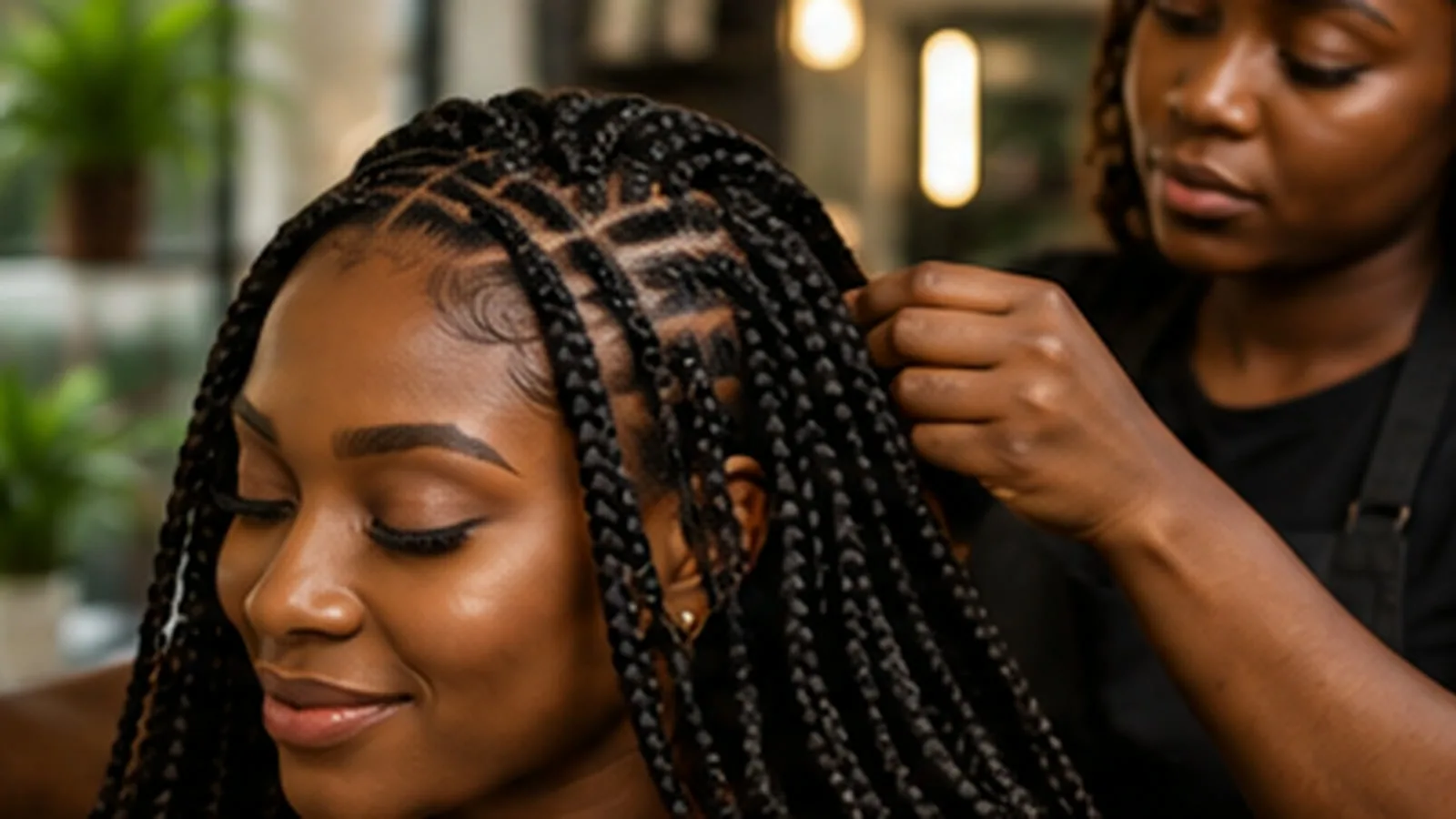
Illustrations on this page are AI-generated and do not show real clients or professionals.
Braids are one of the most versatile ways to wear your hair. They can be sleek or playful, long or short, simple or intricate, and the same braid can look completely different depending on size, length and finish.
If you’re deciding what to book next, here’s a guide to some of the most popular styles and how to choose between them.
Knotless braids
In knotless braids, the braiding hair is added gradually as the braid is created, instead of starting with a knot at the root. Many people choose them because they lie flatter at the base and can feel lighter on the scalp. They are a popular option for a natural-looking finish.
Box braids
A classic for a reason. Box braids are sectioned into neat squares and can be worn in almost any size and length. They’re dependable, familiar to almost every braider, and easy to style up, down or in a bun.
Boho braids
Boho braids are usually knotless braids with loose, curly strands left out along the length or at the ends. The result is a softer, more relaxed look with texture and movement.
Goddess braids
Goddess braids are often larger, with curls or waves left at the ends or woven through. They give a fuller, more sculptural look and are a popular pick for occasions.
Cornrows
Cornrows are braids that lie flat against the scalp. They can run straight back, curve into patterns or form detailed designs, and they work on their own or as a base for other styles.
Choosing the right style for you
- Size: smaller braids look more refined but take longer to install. Larger braids are quicker and bolder.
- Length: from shoulder-length to waist-length or longer. Longer braids add weight, so think about comfort.
- Scalp comfort: tell your braider if your scalp is sensitive. A good braider will pay attention to tension.
- Time: many braiding appointments take several hours, so plan your day around it.
- Maintenance: how often will you refresh your edges, and how will you protect your hair at night?
Before your appointment
- Arrive with clean, detangled, well-moisturised hair, unless your braider has told you otherwise.
- Bring reference photos that show the size, length and finish you want.
- Ask whether the braiding hair is included in the price, and what colour and type they recommend.
- Confirm the time the style is likely to take so you can plan around it.
Looking after your braids
Wrap your hair in a satin scarf or bonnet at night, keep your scalp clean and lightly moisturised, and avoid leaving braids in for longer than your braider recommends. If you’re unsure how long a style should stay in, ask when you book.
Braid words you’ll hear at the salon
- Parting: the way the hair is sectioned. It decides whether braids look square, triangular, curved or in a pattern.
- Feed-in: adding braiding hair gradually into the braid for a more natural taper from root to tip.
- Edges: the fine hair around the hairline. Ask your braider how they will handle and protect yours.
- Length and density: how long and how full the finished style is. Both affect weight, cost and time.
Planning your time and budget
Price usually depends on braid size, length, the style and whether the braiding hair is included. Before you book, ask for a clear quote and what it covers, so there are no surprises at the end. Also ask how long the appointment is likely to take, and bring something to eat, drink and keep you entertained.
If you’re trying a style for the first time, tell your braider. A good braider will talk you through what to expect and help you pick a size and length you’ll enjoy living with.
Find a hairstylist you trust
Whatever style you choose, the person doing it matters as much as the look. Browse hairstylists near you on Combs & Clippers, compare what they offer, and book your next appointment.
Keep Reading
 Beauty Tips
Soft Glam or Full Glam? Know Your Look.
Two different moods. Two different statements. Here's how to decide which makeup style deserves a place in your next beauty appointment.
Read More Nails & Beauty
Your Next Nail Set Is Calling.
From understated elegance to designs that demand attention, discover nail styles worth showing your nail tech at your next appointment.
Get Inspired C&C Culture
Your Next Favorite Barber Might Be Closer Than You Think.
Finding a great barber shouldn't feel like detective work. Here's why discovering the right professional is about more than scrolling through Instagram and hoping for the best.
Read the Story