
Your Portfolio Is Your First Impression. Make It Count.
How to choose, shoot and present your best work so new clients can picture themselves in your chair.
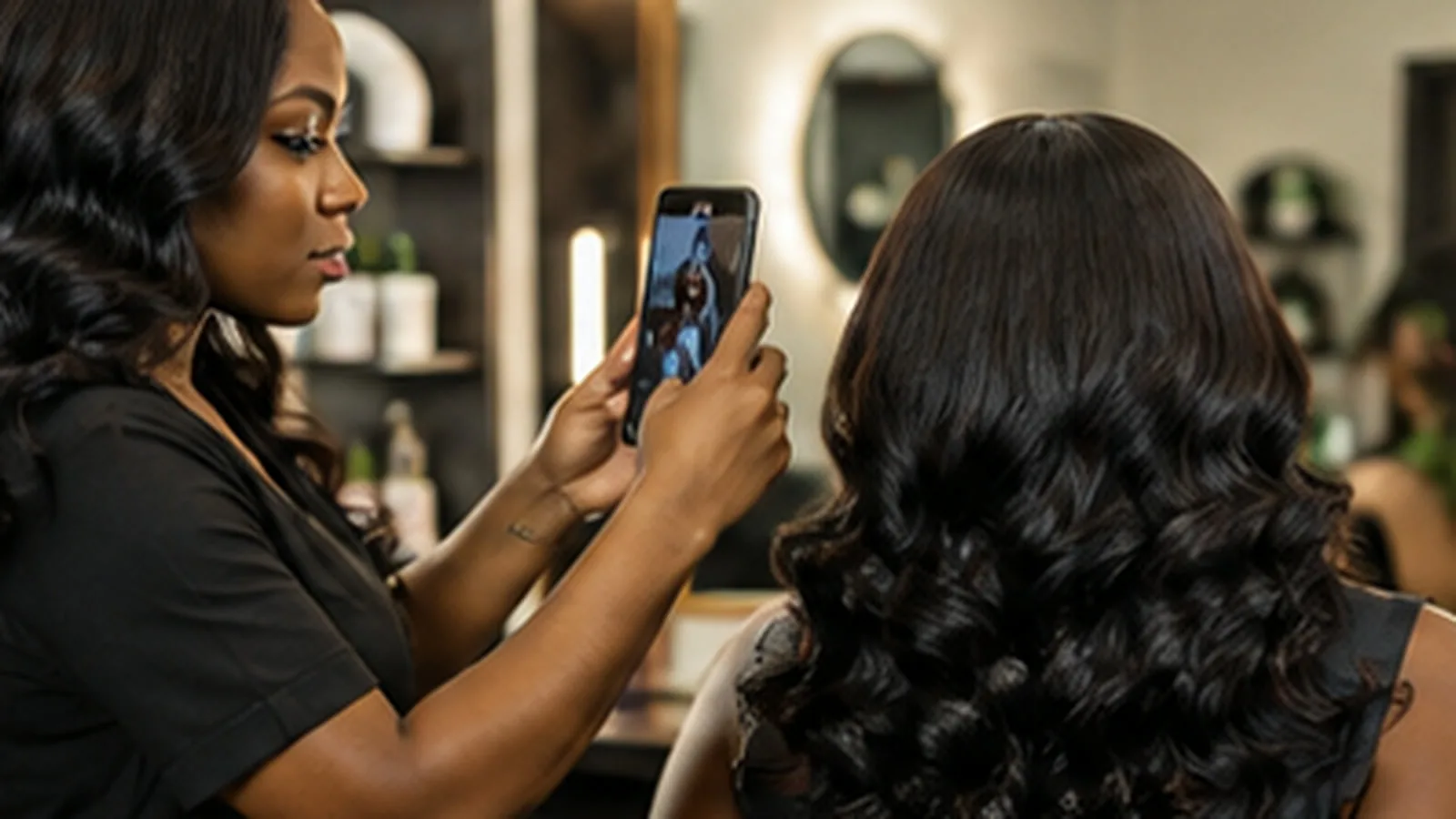
Illustrations on this page are AI-generated and do not show real clients or professionals.
Before a new client meets you, they meet your work. A portfolio is often the first and the deciding impression, so the way you choose and present your photos matters almost as much as the work itself.
Choose quality over quantity
Ten to twelve strong images beat fifty average ones. Pick the pieces you’re proudest of and that match the services you want to be booked for. If a photo is blurry, badly lit or not a good example of your standards, leave it out.
Show your range, but stay focused
Include a mix that tells clients what you can do: different styles, textures, lengths or skin tones. But keep it focused. A portfolio full of unrelated work makes it hard to know what you’re best at.
Photograph your work well
- Use natural light. Stand near a window and avoid harsh overhead lights or strong flash.
- Keep the background clean. A plain wall or tidy space keeps attention on the work.
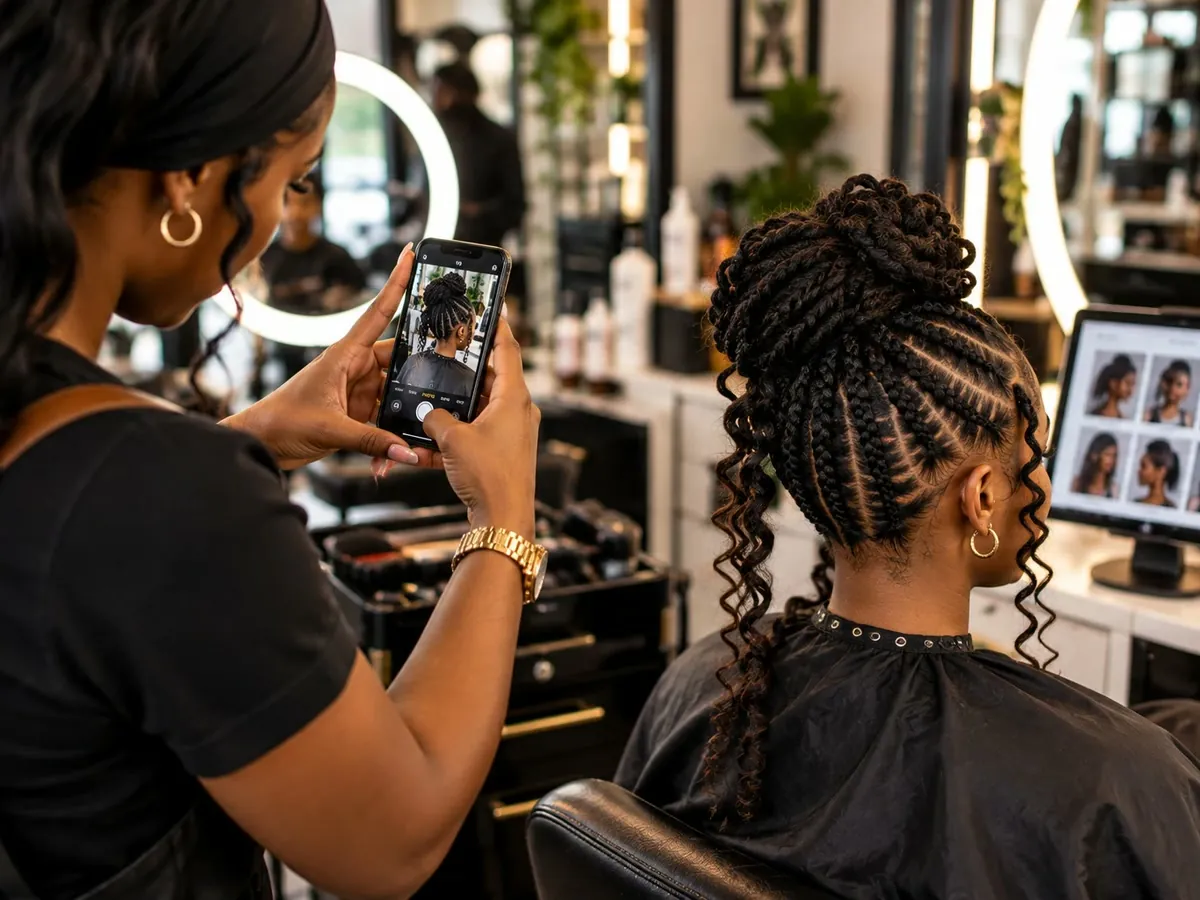
- Shoot from several angles. Front, side and back for hair. Close-ups for nails, lashes and makeup.
- Hold the phone steady and level. Straight, sharp photos look more professional.
- Clean the lens. It sounds basic, but it makes a real difference.
Use before-and-after photos wisely
Transformations help clients understand the result you can deliver. Keep the angle, lighting and framing the same in both photos so the comparison is honest.
Ask permission
Always ask clients before you photograph or share their work, particularly if their face is visible. Most are happy to say yes when you ask politely, and it shows professionalism.
Add context
A short description turns a nice photo into a bookable one. Name the service, mention the length or technique, and note the starting price if you can.
Keep it fresh
Replace older pieces as your skills improve, and remove styles you no longer want to be booked for. Review your portfolio every few months.
A simple shot list by service
- Barbers: front, both sides, back and top, plus a close-up of the neckline or the fade blend.
- Hairstylists and braiders: front, side and back, plus a detail shot of the parting or finish.
- Nail technicians: all ten nails in a relaxed hand position, plus a close-up of a detail.
- Makeup artists: a straight-on face shot and a side angle in natural light.
- Lash professionals: a close-up with the eyes open and a side view to show length and curl.
Captions that help clients book
Keep captions short and useful. Include the service name, the style or technique and, if you can, how long it took or the starting price. For example: “Knotless braids, medium size, mid-back length.” A client reading that can instantly see whether it matches what they want.
If you offer a service that isn’t shown in your photos yet, make it a priority to add it. Clients can’t book what they can’t picture.
Where to show your portfolio
Don’t keep your best work in one place. Show it on your booking profile, your social media and anywhere else clients might find you, and keep the details consistent so people recognise you.
Common portfolio mistakes
- Heavy filters that change the colour of hair, skin or polish.
- Cluttered backgrounds that pull attention away from the work.
- Showing only one type of look, so clients can’t see your range.
- Leaving old photos up long after your style has moved on.
Make sure it leads to a booking
A portfolio should end with a clear next step. Make it obvious how to see your prices and availability and how to book. On Combs & Clippers, clients can find beauty professionals near them and book appointments, so keep your services, prices and hours up to date.
Keep Reading
 Business Growth
Great Skills Deserve Great Visibility.
Practical ways to make sure the clients who need you can actually find you.
Read the Story Client Acquisition
Instagram Likes Don't Always Pay the Bills.
Why a big following doesn't always fill your diary, and how to turn attention into appointments.
Read the Story The Pro Chair
You're Talented. But Are People Finding You?
Being great at what you do is only half the story. Discover how beauty professionals can turn their skills into consistent bookings.
Grow Your Business