
Low Fade, Mid Fade, or High Fade? Let's Settle This.
Not all fades are created equal. Discover the differences and find the one that works best for your face, hair, and personal style.
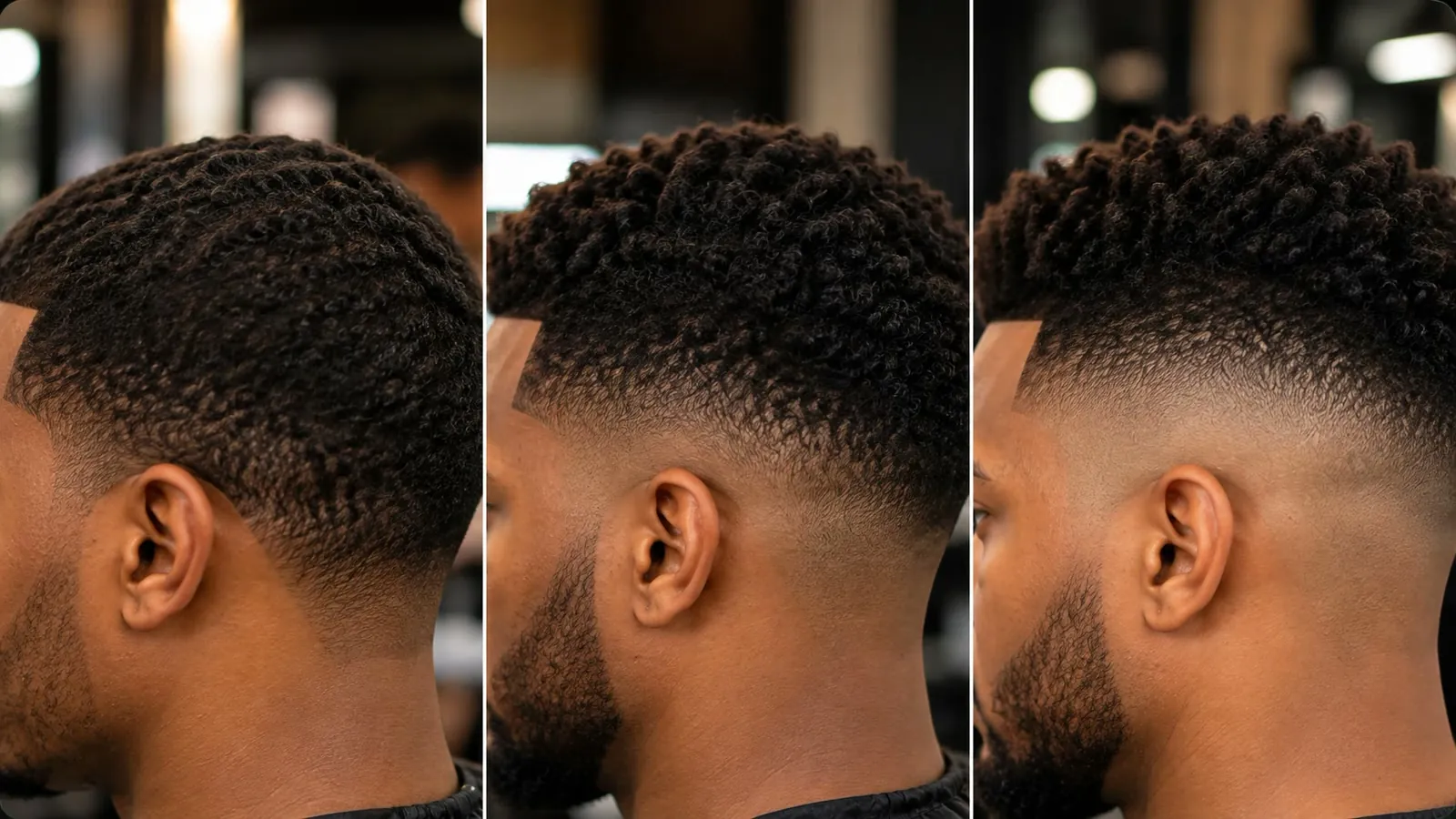
Illustrations on this page are AI-generated and do not show real clients or professionals.
Walk into any barbershop and ask for “a fade” and the first thing your barber will ask back is: which one? Low, mid or high changes the whole feel of a haircut, and the difference comes down to a single decision: where the fade starts.
Here’s a plain-language guide to all three, so you can arrive at your next appointment knowing exactly what to ask for.
First, what is a fade?
A fade is a haircut where the hair on the sides and back gets gradually shorter as it moves down the head, blending from longer hair on top to very short hair (or skin) near the neckline and ears. Barbers create the blend with clippers and different guard lengths, then smooth it out so there’s no visible line.
The “low”, “mid” and “high” part tells you how far up the head the shortest section begins.
The low fade: subtle and tidy
A low fade starts close to the ear and follows the natural hairline around the back of the head. Most of the side stays longer, so the effect is clean without being dramatic.
- The look: neat, understated, easy to wear to work or formal events.
- Good for: anyone who wants a sharp finish while keeping more hair on the sides.
- Keep in mind: it grows out gently, so you can often stretch it a little longer between visits.
The mid fade: the balanced choice
A mid fade starts around the temple area, roughly halfway up the side of the head. It gives a clear contrast between the sides and the top without going to the extreme.
- The look: confident and versatile, sitting between subtle and bold.
- Good for: people who like a defined shape and are not sure which way to go.
- Keep in mind: the contrast shows up faster as it grows, so many people refresh it every few weeks.
The high fade: bold and high-contrast
A high fade starts high on the head, near the temples. The sides and back are very short, which puts the focus on the hair on top.
- The look: sharp, striking and modern.
- Good for: showing off textured tops, curls, twists or longer styles.
- Keep in mind: because the contrast is strongest, regrowth is more noticeable, so it usually needs the most frequent upkeep.
How to choose for your face and hair
There are no strict rules, but a few things are worth thinking about. Your hair texture and density affect how the blend looks. Your hairline and head shape change how each fade sits. Your lifestyle matters too: if you can’t get to the barber often, a lower fade is more forgiving.
A good barber will look at your head shape and hair as you sit down and suggest what works. Bring a photo of a cut you like, and ask how it will grow out.
Words worth knowing before you book
- Skin or bald fade: the fade goes all the way down to the skin.
- Drop fade: the fade line curves down behind the ear instead of running straight around.
- Taper fade: a softer cut that is often confused with a fade. We explain the difference in Taper vs Fade.
How to ask for it
Tell your barber where you want the fade to start (low, mid or high), how short you want it at the bottom, and how much length to leave on top. Add what you want at the neckline, natural or squared off. A reference photo takes the guesswork out of all of it.
Ready to find your fade?
The right fade is the one that suits your hair, your face and your routine, and the right barber is the one who listens. Browse barbers near you on Combs & Clippers, compare what they offer and book your next appointment when you’re ready.
Keep Reading
 Hair & Grooming
Taper vs Fade: What's the Difference?
They might look similar, but they're not the same. Discover what sets these popular cuts apart before your next barber appointment.
Read the Story C&C Culture
Your Next Favorite Barber Might Be Closer Than You Think.
Finding a great barber shouldn't feel like detective work. Here's why discovering the right professional is about more than scrolling through Instagram and hoping for the best.
Read the Story Style Inspiration
Braids, But Make Them Yours.
Knotless, boho, goddess, or classic cornrows? Explore braid styles that combine personality, versatility, and effortless beauty.
Explore the Looks